Can You Use Warm Bamboo Massage on Clients with Cerebral Palsy?
That’s a Good Question!
A former student from my Bamboo-Fusion class reached out recently with this one: “I may have a client with Cerebral Palsy. He’s got limited mobility, and I was thinking warm, not hot, bamboo might be good for him. Do you think it’s a good thing to incorporate that in his massage?”
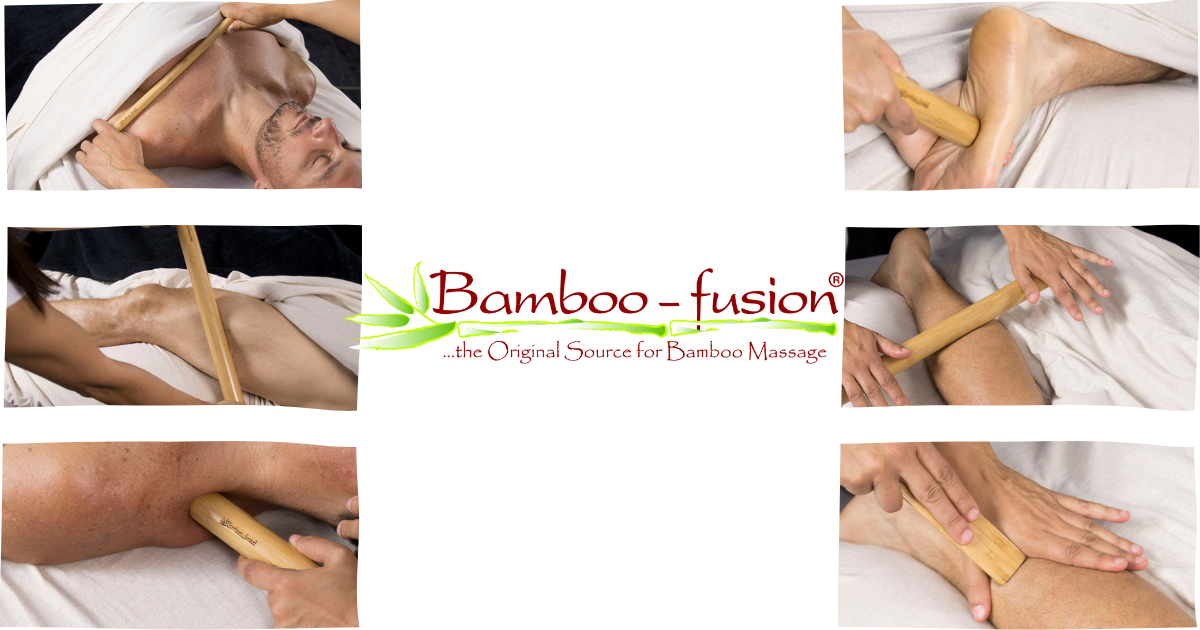
(If you haven’t experienced the delight that is Bamboo-Fusion, it’s a massage technique using warmed bamboo sticks. Think hot stone, but 100000 times better.)
Short answer? It can be, depending on him. The diagnosis alone doesn’t tell us whether heat or bamboo pressure is a good fit. He does. So let’s talk through how to find out.
Here’s What I Thought I Knew
My gut reaction was an easy yes. Warmth relaxes tight muscles. Bamboo-Fusion is built around warmth. Tight muscles plus warm bamboo? Done.
And my student was already thinking the right way about the heat. “Warm, not hot” is a smart instinct with any client who might not feel or report temperature the way most people do.
But I realized I was treating “tight” like it meant the same thing for this client as it does for the desk worker with knotted-up shoulders. It doesn’t. And if the tightness comes from somewhere different, then what helps it (and what makes it worse) might be different too.
So I Dug Deeper
Here’s the thing about spasticity: it’s not really a muscle problem. It’s a messaging problem. Normally the brain acts like a bouncer at the door, keeping the muscle’s stretch reflex in check so it doesn’t overreact. With CP, the bouncer’s on a break. So the reflex fires whenever it feels like it (and usually harder than it needs to). And it’s all about speed. Stretch that muscle quickly and it slams the brakes. Lengthen it slowly, and it’s much less likely to fight you.
Then there’s dystonia, spasticity’s less famous cousin. Dystonia is when muscles contract on their own and pull a body part into a twisted or locked-up position, or into slow, writhing movements. A lot of the time, muscles on both sides of a joint are firing at once, so the limb isn’t so much tight as stuck.
And here’s what surprised me: dystonia doesn’t care much about speed. Trying to move (or even thinking about moving) can set it off. So can stress, pain, being startled, getting excited about something good, and sometimes even touch or being moved. It comes and goes, too. An arm that’s relaxed one minute can twist up the next. Being calm often helps it quiet down, but not always, and not for everyone.
And over years, either one can lead to contracture: structural changes in the muscle and connective tissue that limit how far a joint can move. That part isn’t the nervous system anymore. It’s tissue, and it’s not going to let go in a massage session, no matter how warm the bamboo is.
Plenty of clients with CP have some combination of all three. Which means “he’s tight” is really the start of the conversation, not the end of it.
Is the Juice Worth the Squeeze?
For a lot of clients, I think it can be, as long as we’re honest about what we’re offering.
Massage doesn’t fix spasticity or dystonia. The source is in the brain, not the muscle. The research on massage and CP is limited and mixed (most of it is on kids), and I didn’t find anything looking at bamboo specifically. What we can realistically offer is comfort, and maybe some temporary ease. For a lot of clients with CP, a session of genuine comfort is a big deal.
What doesn’t work? Seek and destroy. Chasing that tension with depth and intensity creates pain, bracing, and startle, and every one of those can drive tone right back up. Same goes for forcing a stiff joint. A contracture isn’t going to give, and pushing it means pain and possible injury, especially since people with limited mobility can have more fragile bones.
But here’s the thing: not all of his tension is CP. Adults with CP often carry a lot of plain old overuse strain from compensating. Think shoulders, neck, forearms, and wrists from pushing a wheelchair or using crutches, or low back and hips from an altered gait. If his CP mostly affects one side, the less affected side is often doing double duty. For a lot of these clients, that’s where they’ll feel the most relief.
Is it CP or is it just sore?
You don’t have to know, and honestly, you can’t diagnose it anyway. These things overlap and change from day to day. What you can do is ask him. Most adults with CP know their bodies extremely well and can tell you the difference between “that’s my CP” and “that’s just sore from pushing my chair all week.”
Then let his body guide the session. Start slow and gentle everywhere. If an area responds well to more focused work and he says it feels good, keep going. If it tightens up, pushes back, or he tells you it’s not helping, go back to slow and supportive.
Here’s How to Do It Safely
Start with questions. Before, during, and after.
You’ll notice I didn’t say “get clearance from his doctor.” A lot of us were taught that, but nobody gives a massage therapist permission to do our job, and a signature on a form doesn’t make a session safe. What we need is information, and the best source of it is the client. If there’s a specific question he can’t answer (like whether a recent procedure changes anything, or the safest way to transfer him), his PT, OT, or doctor may be able to help, with his okay.
Before the session, find out:
- Where he feels tightest, and what makes it worse. He already knows his triggers, and a lot of them (temperature, pacing, surprise) are things you control.
- Which joints don’t move much, or hurt when moved. Those are the places to support and work around, not push.
- Whether he relies on that tightness to stand or transfer. More on this in a second, because it’s the one people miss.
- The usual intake stuff, plus surgeries, hardware, injection sites, spots of reduced sensation, seizures, and medications.
- How he does with heat (don’t assume), the best way for him to get on and off the table, what position is comfortable, how long he can comfortably go, and how he’ll let you know to stop or ease up. That doesn’t have to be words; signals or a communication device work too.
About the heat:
- “Warm, not hot” is a great start, but it isn’t enough everywhere.
- Skip added heat over any area where he doesn’t feel temperature normally, and skip it altogether if he can’t give you reliable feedback during the session.
- The bamboo still works at room temperature.
During the session:
- Move him slowly. Repositioning, lifting a limb, and anything that lengthens a muscle quickly is where that stretch reflex kicks in.
- Keep your pressure steady and predictable, and keep checking in.
- Avoid deep pressure he’d flinch from, and anything that would surprise him.
- Support stiff limbs fully with bolsters so the muscles don’t have to hold them up.
- Don’t force range of motion, and don’t move into pain or past a fixed restriction. If he’s working on stretching with his PT, that’s their territory.
If dystonia is part of his picture:
- Ask how he likes to handle positioning. Some people do better staying passive while you move them; for others, being moved sets it off more. He’ll know.
- Don’t fight a twisted posture. Support the limb right where it is, keep your work slow and steady, and give it time.
- Tell him before you move to a new area. Predictability helps a lot.
- If something that was fine ten minutes ago tightens up, that doesn’t mean you did something wrong. A noise, a thought, or a shift in position can be enough.
At the end of the session:
- Some people with spastic CP rely on their muscle tone to bear weight, almost like a built-in brace. A relaxing session may leave his legs feeling different when it’s time to stand.
- Leave time for a slow transition: sit at the edge of the table first, feel his feet on the ground, and have whatever support he uses ready.
- You could also go lighter on the legs, or work them earlier in the session. Ask him what makes sense.
What if he’s in a chair?
Bamboo works great seated, including in a mobility chair, and it can skip the transfer entirely. A few things change:
- Work over clothing. Clothing changes how heat comes through and hides the skin, so don’t make the bamboo warmer to compensate, and keep checking in with him about how it feels.
- Rolling and compressions work better than gliding strokes, which drag the fabric.
- Brakes on (or power off for a power chair), and leave his positioning supports, belts, and setup the way he uses them unless he says otherwise. Keep your pressure moderate and avoid pushing him sideways.
- Protect your own body too. Get a stool at the right height, or kneel on a pad for legs and feet, rather than reaching and twisting around the chair. Your body will thank you.
The Bottom Line
Warm bamboo can be a lovely fit for some clients with CP, and the way to know is to ask. Keep the heat moderate (and skip it where sensation or feedback isn’t reliable), move him slowly, never force a joint, and let his body and his answers guide the session.
Working with a medically complex client can feel intimidating at first. Everyone starts somewhere. Most of what this client needs from you is what good massage already looks like: careful intake, real communication, and paying attention to how his body responds. That’s totally doable.
Here’s What I’m Still Learning
There’s very little research on massage for adults with CP, and none that I found on bamboo specifically. So I’d love to hear from therapists who work with this population regularly. What have you found works? What have you learned the hard way?
And yes, my student also asked about cupping, taping, and percussion. That’s a good question for another post.
Have you worked with clients with CP, with or without bamboo? Tell me about it in the comments. And if you’ve got a question of your own, send it my way; it might become the next “That’s a Good Question!” post. Want to learn Bamboo-Fusion yourself? Check out the course page to see upcoming classes.
Leave a Reply